sales@north-bridges.com
86-13862120662

Electro Magnetic Spectrum Operation (EMSO)
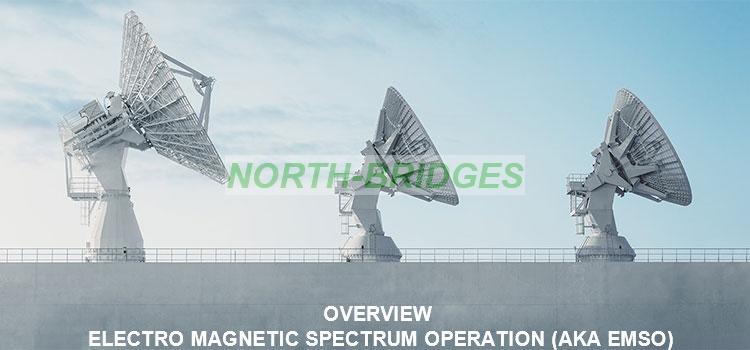
Since the Cold War, the potential for the EMS to support conventional military forces has been clearly understood by both Western and Eastern countries alike. Hence, both parties have invested in Spectrum Dependent Systems (radars, radios, EW and SIGINT systems and systems of systems) for military and national security purposes.
The EMS has always been militarized, but the dual use nature of the EMS, the enormous dependency that the global economy has developed on EMS-based services and the impacts of technology miniaturization are combining to create challenges for all nations because of their reliance on services tied to the EMS. Furthermore, adversaries are aggressively fielding electronic attack and cyber technologies that erode the ability to use the spectrum for joint operations, while the global wireless broadband industry is seeking to reallocate spectrum from defense use to commercial uses, to meet consumer demands for greater mobility and data connectivity.
We need to think of the EMS as virtual international critical infrastructure and all nations need to do what they can to protect and preserve the EMS environment.
Electromagnetic Spectrum Operations (EMSO) discipline
Modern military forces are required to operate in an increasingly complex Electromagnetic Environment (EME), which has recently been recognized as an “operational environment” by more and more military organizations, as referenced in one strategy report “We recognize the Electromagnetic Environment as an operating environment.”
For example, NATO doctrine recognizes that NATO operations are complicated by an increasingly congested and contested EME. All modern forces conduct operations that depend on the use of the EME. The recognized need for military forces to have access to and utilize the EME creates vulnerabilities and opportunities for EM spectrum warriors.
Therefore, a new operational discipline has been set up accordingly, named Electromagnetic Spectrum Operations or EMSO.
For example, NATO military operations conducted in all environments use the electromagnetic spectrum to create effects that support military objectives. As a part of the battlespace, NATO forces conduct Electromagnetic Spectrum Operations (EMSO) in the Electromagnetic Environment (EME). EMSO involves activities that exploit the EME to enable or enhance NATO operations and hinder the potential adversary's ability to do the same. As the combat arm of EMSO, Electromagnetic Warfare (EW) activities provide military action that exploits electromagnetic energy to provide situational awareness and create offensive and defensive effects.
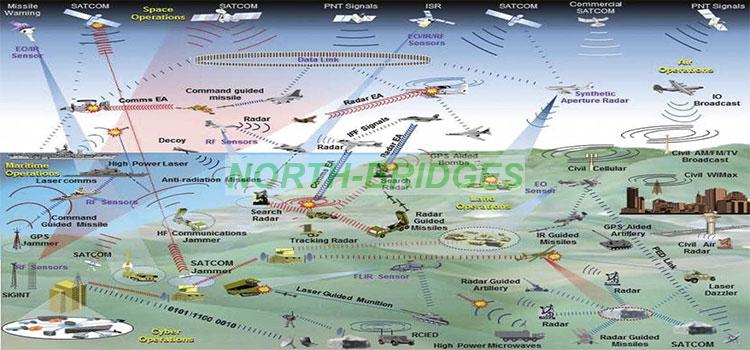
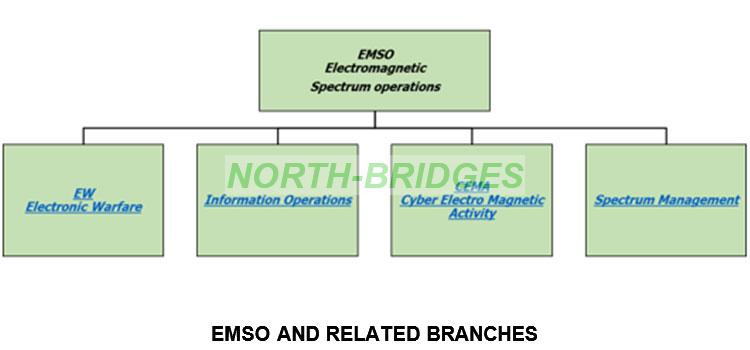
As the electromagnetic spectrum becomes more congested and contested, Electromagnetic Spectrum Operations (EMSO) are increasingly critical to achieving and maintaining operational dominance across modern defense systems. EMSO includes electronic warfare, signals intelligence, spectrum management, and cyber electromagnetic activities (CEMA), all of which play a critical role in today’s complex mission environments. These systems face growing challenges that require solutions capable of adapting, operating across multiple functions, and remaining resilient under pressure. Ongoing advances in technology and the changing demands of modern operations are leading to the development of more capable and integrated system designs.
Trends and Challenges in EMSO Systems
As EMSO systems grow in strategic importance, rapid advancements in RF design are transforming how these capabilities are delivered and sustained. These innovations are resulting in more capable system designs. These include evolving solid-state design processes that incorporate technologies such as GaN, direct to RF wideband data converters, an increase in component and module integration, and devices in multi-element antennas.
These technology shifts are increasing system agility and mission responsiveness, but they also bring new layers of complexity. Highly integrated architectures that combine digital-to-RF conversion, embedded DSP, and antenna-inpackage designs are more challenging to characterize and validate using traditional test methods. At the same time, modular, multi-element antennas, capable of forming multiple beams and operating across wide frequency ranges, demand precise calibration and signal fidelity across domains.
The result is a dual challenge: while EMSO systems are becoming more capable and adaptive, the testing and validation strategies required to ensure performance must evolve just as rapidly. Meeting this demand calls for mission-ready, multidomain test environments that reflect the complexity of real-world operational conditions is critical.
As these systems become more complex and capable, they also require more sophisticated validation approaches. Traditional test processes, which include digital modeling, hardware-in-the-loop integration, open-air range trials, and live mission execution can be time-intensive and cost-prohibitive, especially when deferred until later development cycles. As you move closer to range and live testing, validation becomes increasingly expensive and risk-prone, making it critical to shift system-level insights earlier into the process. High system integration, software-defined functions, and multidomain interoperability make it difficult to isolate performance issues or simulate realistic mission conditions early in the process cycle. Delaying system-level validation until range or mission testing can lead to late-stage failures and schedule risk.
To address these challenges, reduce risk, and accelerate development, organizations are shifting mission-scale fidelity testing earlier in the design lifecycle. By integrating digitally simulated environments with hardware-in-the-loop and RF validation labs, teams can rapidly iterate and identify issues before deployment. This approach reduces dependency on expensive range testing, enables earlier performance verification, and supports more agile system development. The result is faster, more confident delivery of EMSO capabilities equipped to meet today’s dynamic operational demands.
Software Defined Radio
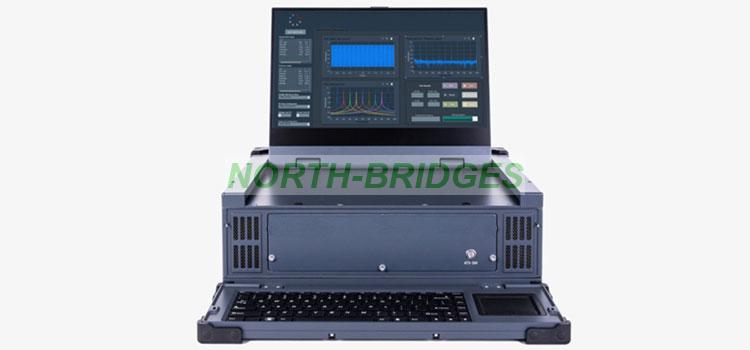
NORTHBRIDGES provides both COTS and tailor-made Software Defined Radio (SDR) platform. NORTHBRIDGES Software Defined Radio (SDR) platform empowers Electromagnetic Spectrum Operations (EMSO) with a flexible, high-performance solution for radar, electronic warfare, and secure communications applications. By integrating general-purpose processors, field-programmable gate arrays (FPGAs), and wideband RF front ends into a unified architecture, NORTHBRIDGES enable rapid prototyping and deployment of advanced RF systems. Whether for spectrum sensing, radar target emulation, EW signal generation, or agile communication link prototyping, our SDR family spans from low-cost research units to rugged, multichannel, deployable systems trusted across defense and intelligence communities.
Supporting both LabVIEW and open-source workflows, the NORTHBRIDGES ecosystem offers seamless integration with GNU Radio via the open-source Hardware Driver. Real-time signal processing can be implemented directly on the FPGA using inline digital signal processing (DSP) blocks, enabled by the RF Network-on-Chip (RFNoC) framework and China local FPGA development software. This accelerates development for mission-critical applications requiring low latency, high dynamic range, and rapid reconfiguration across the RF spectrum.
Compatible Hardware
NORTHBRIDGES EMSO test and measurement software works with COTS PXI modular instruments. The PXI chassis and controller are integral parts of the system, with the option to add co-processing and timing & synchronization modules.
PXI Chassis
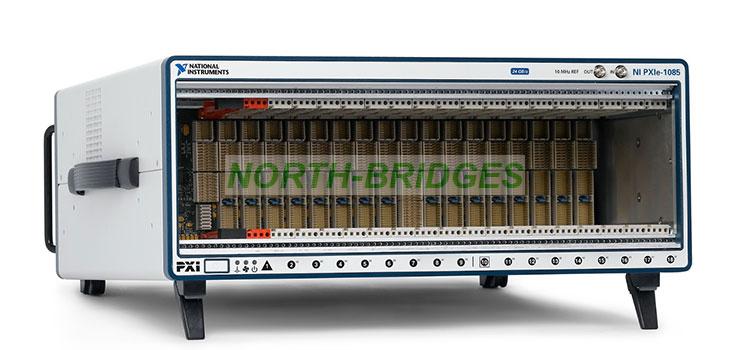
The PXI chassis plays an important role in transporting data between modules and the host controller, as well as providing cooling, timing, and synchronization.
PXI Controller
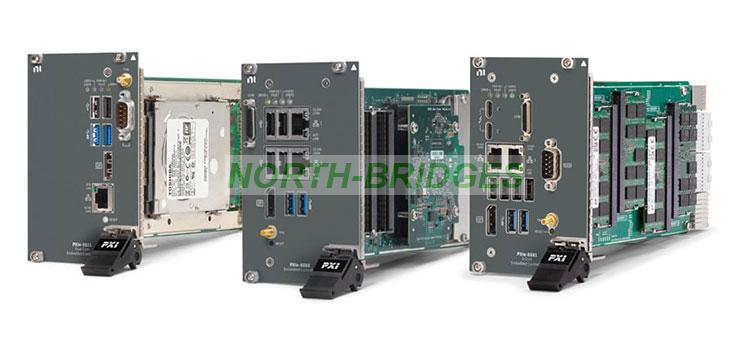
The PXI controller provides embedded computing within the PXI chassis, and runs any host-based processing functions.
Vector Signal Transceivers
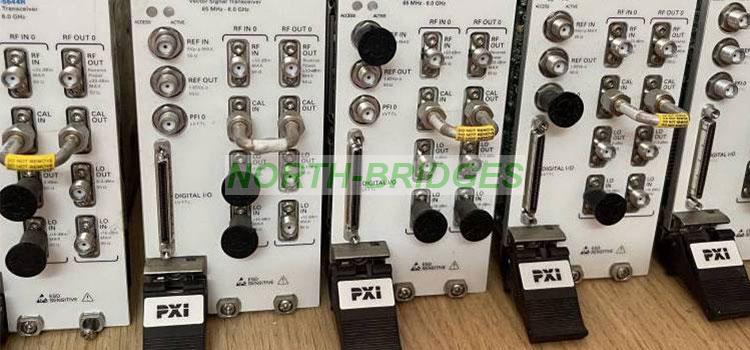
Vector Signal Transceivers provide the RF generation and acquisition capability needed for EMSO systems.
High-Speed Serial Coprocessor
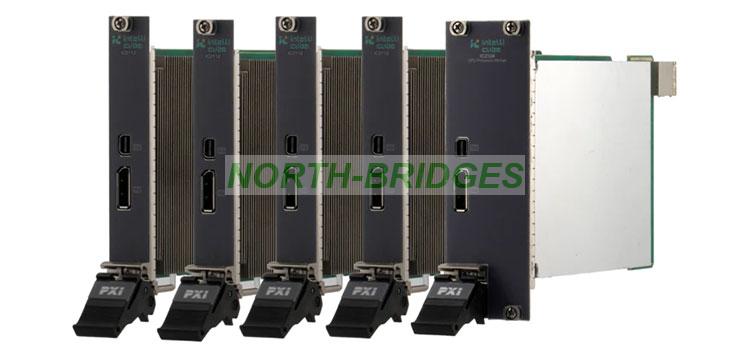
The High-Speed Serial Instrument as an FPGA coprocessor can be used for augmented signal processing and inline measurements.
Timing and Synchronization
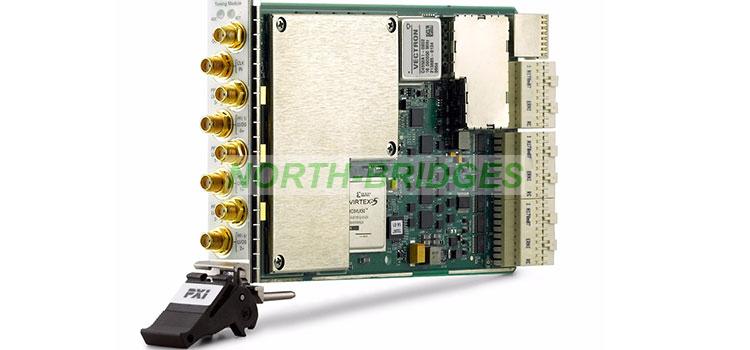
The OCXO PXI Synchronization Module may be optionally added for certain systems.
System Software
China local RF HWIL system software addresses these challenges with cohesive, mission-specific solutions to EMSO system validation. The Multi-Emitter Generator, Radar Target Generator, and RF Record and Playback software offer mission-scale fidelity across key threat environments to create a common, flexible platform. These software tools enable more integrated testing with the speed and adaptability needed to stay ahead of evolving operational demands.
Contact: Windy Lian
Phone: 13862120662
E-mail: sales@north-bridges.com
Whatsapp:
Add: Suzhou City, China
We chat