sales@north-bridges.com
86-13862120662
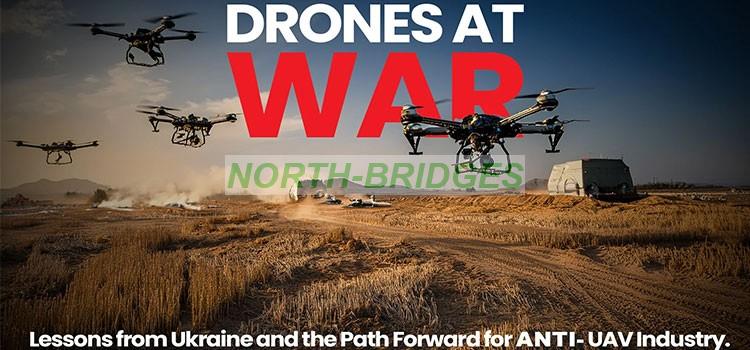
Defeats COTS UAV Battlefield Threats with Military Grade SDR
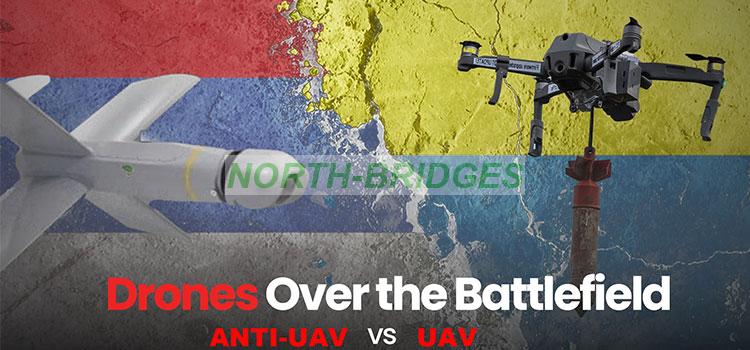
Case Study Highlights
- NORTHBRIDGES delivered a drone defense solution faster and at a lower cost with China local SDR products.
- As new UAV threats emerge, NORTHBRIDGES can rapidly prototype and deploy new algorithms based on the China local SDR open source software toolchain.
- The low size weight and power (SWaP) of the China local SDR provided a highly mobile and deployable anti UAV solution.
- SDR Ingress Protection Rate up to Military grade.
The Challenge
It’s nearly impossible to look at technology news without seeing an article about drones. Whether detailing how SF-Express wants to use drones to deliver packages or revealing amazing aerial video of automated drones following snowboarders during 2022 Beijing Winter Olympics, commercial Unmanned Aerial Vehicle (UAV) are becoming ubiquitous.
UAV emergence has benefited many applications, including sports broadcasting, forest fire prevention and border patrol. Offering powerful intelligent software, UAV are becoming inexpensive and easier to use, with substantial operating range.
As with any disruptive technology, UAV operation often attracts bad actors looking to exploit the capability for less-than-noble objectives. Some reports have shown unmanned commercial drones being used for unwanted surveillance. Bad actors can easily execute disruptive operations even disrupting commercial airspace, as we recently saw at international airport in Tianjin, PR China.
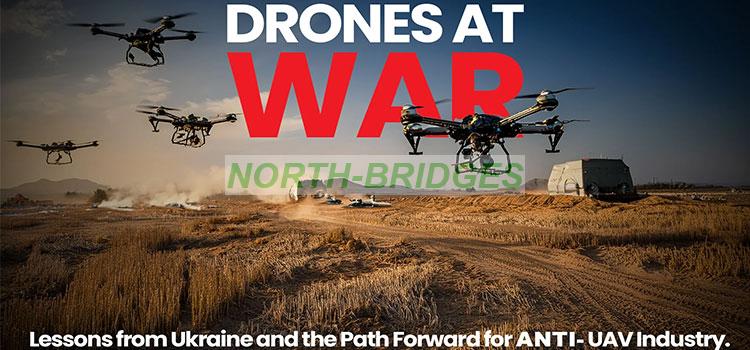
Commercial UAV are becoming ubiquitous in battlefield also. From Gaza to Ukraine, modern wars stretch longer and longer. Long term warfare attrition has led both opponents to increasingly rely on inexpensive commercial-grade UAV for attacks, reconnaissance, and surveillance.
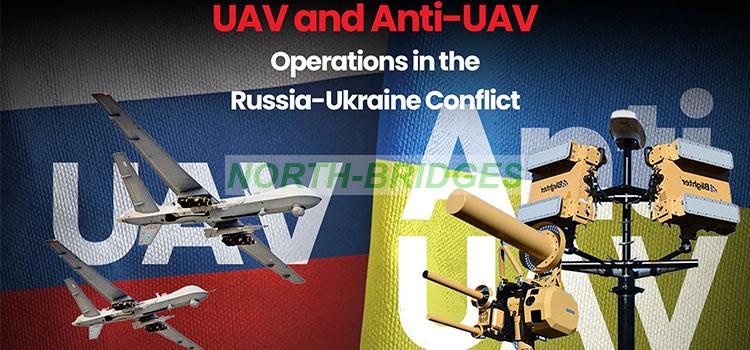
The Russia-Ukraine conflict illustrate that anti-UAV only by traditional Radar, cannon and missiles is costly and unsustainable. Such lessons have created a need for inexpensive UAV defense systems that rapidly evolve with ever-increasing threat frequency and sophistication.
Key Technology Challenges
New launched commercial UAVs offer increasingly more sophisticated command and control (C2) and navigation systems in recent years.
It’s common nowadays for a commercial grade UAV to have active object avoidance and autonomous modes.
When a UAV isn’t under direct pilot control, it makes C2 countermeasures almost impossible; thus, it is common to disrupt or deny GPS of UAV with either spoofing or jamming.
UAV with active remote piloting offer usually a variety of communication methods, ranging from basic analog modulation to highly secure digital links with encrypted commands.
As preferred solution, people might consider using a legacy high-power jamming technique; however, these can be quite disruptive to friendly forces and can compromise a stealth operation—not to mention dealing with regulatory obstacles in many countries.
Obviously, you cannot count on a single defense system adaptable to target the wide range of C2 disruption methods. That is a considerable challenge.
Firstly, how do you keep pace with UAV technological evolution and field new threat countermeasures quickly?
Because traditional long development cycles may be incompatible, many systems have moved to COTS hardware technology for faster deployment so that Anti-UAV system designers can focus on not hardware implementation but the threat itself.
Secondly, anti-UAV system should be compact and robust.
While base protection is important, many military operators have to deploy an anti-UAV system close to front line. System and power must be compact and robust for mobile deployment.
Mobile systems must maintain stealth and a long operational life on mission; thus, it often comes down to size weight and power (SWaP). Choosing a platform that can go from prototype to deployment and meet SWaP and radio performance standards is important.
The NORTHBRIDGES Anti-UAV Solution
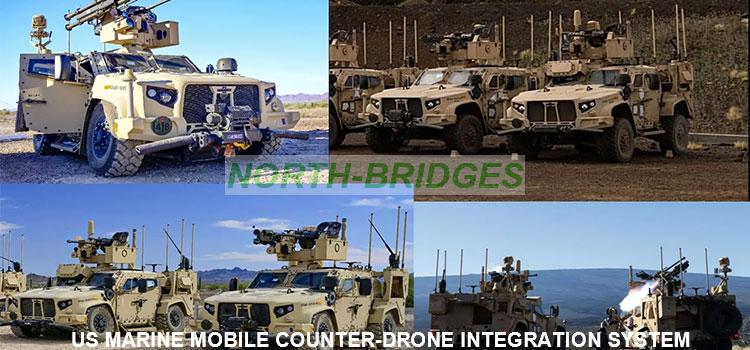
PS: The U.S. Marine Corps has begun fielding full-rate production MADIS-equipped JLTVs, giving maneuver units a mobile, integrated defense against drones and low-flying air threats during expeditionary operations (Picture Source: DVIDS)
The NORTHBRIDGES solution employs nondestructive countermeasures by disrupting the C2 and navigation systems of many common threats. Additionally, NORTHBRIDGES software can intercept navigation downlink reports and passively display drone locations to an operator in real time.
To combat both technology evolution and SWaP challenges, NORTHBRIDGES solutions built its system on China local commercial SDR technology. By combining SDR with open source software, NORTHBRIDGES can rapidly adapt to evolving threats by simply deploying new algorithms, which reduces the time and cost to deploy new capabilities. Key to the NORTHBRIDGES solution’s effectiveness benefits from inexpensive hardware and proprietary innovative software radio algorithms.
The NORTHBRIDGES Anti-UAV system is compatible with China local LWX310 PRO or USRPX310 SDR, the GNU Radio open source software community, and the RFNoC framework. China local SDR is designed for adaptability, making it perfect for a rapidly developed, highly adaptable, low-power mobile application.
NORTHBRIDGES is also readiness to satisfy customer strict tailor-made requirement in terms of form factor and ingress protection, even if it is required to clasp Picatinny rail.
Conclusion
UAVs are fun and useful technology; however, some always seek to exploit this disruptive technology with bad intent.
Anti UAV solutions are subject to both technological and regulatory challenges.
However, Russia-Ukraine conflict has demonstrated that as regulations evolve, most anti UAV development targets military applications.
Contact: Windy Lian
Phone: 13862120662
E-mail: sales@north-bridges.com
Whatsapp:
Add: Suzhou City, China
We chat