sales@north-bridges.com
86-13862120662
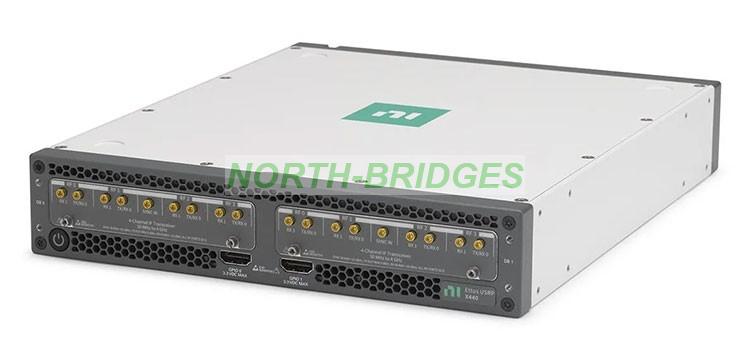
Which USRP Is Right for You?
Overview
If you’re planning to develop a wireless application and need to select a software defined radio (SDR), you may have a few questions, such as:
- Where do I start?
- Which Universal Software Radio Peripheral (USRP) is right for me?
- What software development tool should I use?
Let's take the respected industry giant NI as an example to explain the key differences between various USRP models and can help you select the right radio.
What is a USRP?
Universal Software Radio Peripherals, or USRPs, are a family of soft-defined radios made by NI.
Software defined radios are wireless devices commonly used for wireless research prototyping and deployed applications. SDRs are commonly used for communications, next-gen radar, electronic warfare (EW), over-the-air (OTA) test, and 5G research.
Most SDRs have a common hardware architecture including general purpose processors (GPPs), FPGAs, and RF front ends of varying performance.
NI offers a variety of different USRP hardware model, ranging from small form factor, low-cost devices to high-end multi-channel radios with large FPGAs.
All NI USRPs have the same core hardware architecture, shown in Figure 1.
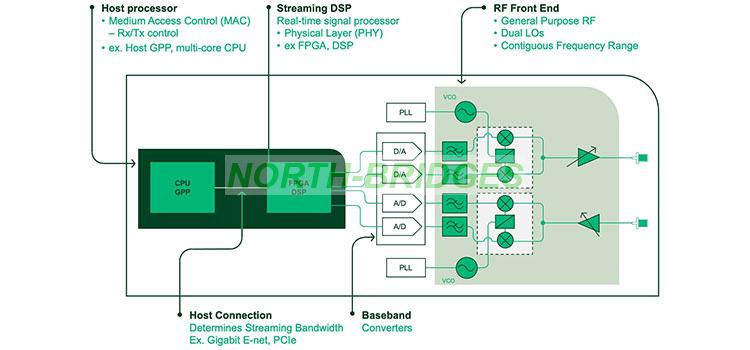
Figure 1: Typical Hardware Architecture of an SDR
The NI and Ettus Research Universal Software Radio Peripheral (USRP) products are a family of software defined radios designed to meet the wide range of wireless prototyping and deployment requirements. Let’s explore the various hardware and software considerations to help you choose the right radio.
How to Select USRP Hardware
When choosing the right USRP device for your application, a good place to start is by asking a few questions related to signal parameters, size, weight, power, cost (SWaP-C), performance, and environmental application requirements.
Question one: What center frequency and bandwidth do I require? This question is easy enough to answer, but the next one is more involved: How do I plan to move signal data on or off the device?
This brings into focus the importance of data interfaces. For example, the USRP-290x models are connected to the host through USB and are limited by the maximum sustained bandwidth of that interface, whereas the Ettus USRP X440 is equipped with two 100 GbE interfaces capable of moving much more data.
Most USRP devices have a maximum frequency up to 6 GHz and some higher; however, the NI Ettus USRP X410 can operate in the 7 GHz band. On the lower frequency end, some radios go down to 75 MHz and some as low as DC, depending on the analog chipset used. See Table 3 for a breakdown of each model.
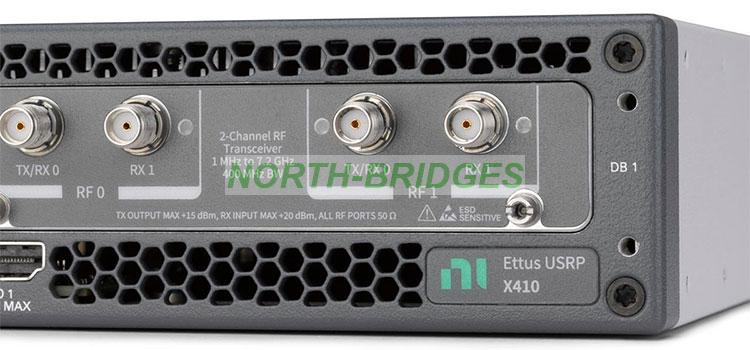
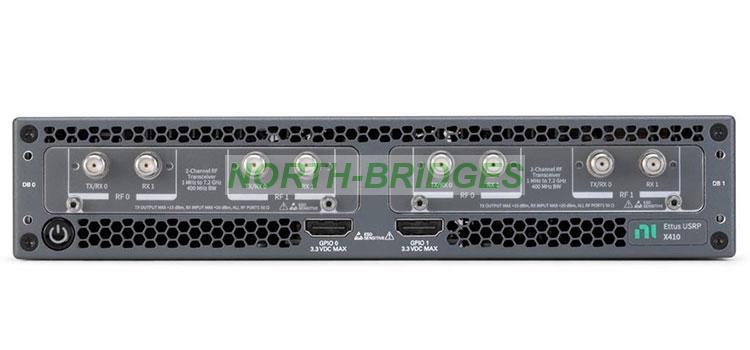
Figure 3: The Ettus USRP X410, built on an RFSoC, is a high-frequency wideband SDR with a center frequency up to 7.2 GHz.
Cost and Performance Trade-offs
There are trade-offs to consider when choosing a USRP device—specifically, cost versus performance. If you require a radio at a great value and you do not have advanced FPGA or wide bandwidth requirements, the NI USRP 290x or Ettus Research B200mini are great options. If you need the widest bandwidth and frequencies higher than 6 GHz, the NI Ettus USRP X410 offers support up to 7.2 GHz and the OBX daughterboard for the X300 series motherboards supports up to 8.4 GHz. There are many options available in addition to these two examples. Table 3 gives a full break down across all models.
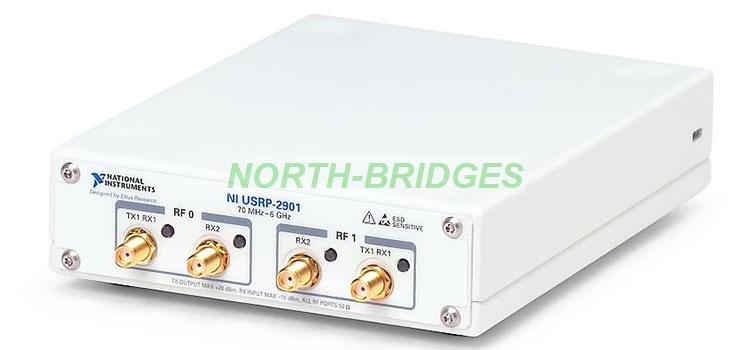
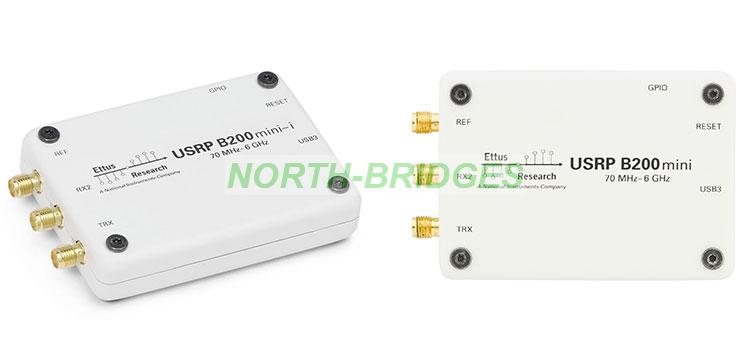
Figure 4: USRP 2901 and USRP B200mini Low SWaP-C SDRs
If you require the widest possible instantaneous bandwidth, the NI Ettus USRP X440 may meet the need. There are many options available beyond these examples; Table 3 provides a full breakdown across all models.
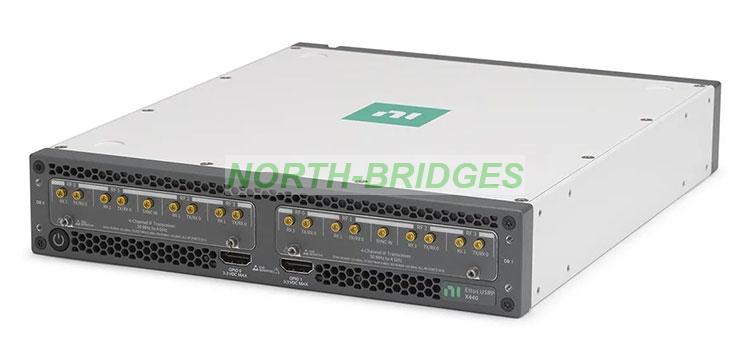
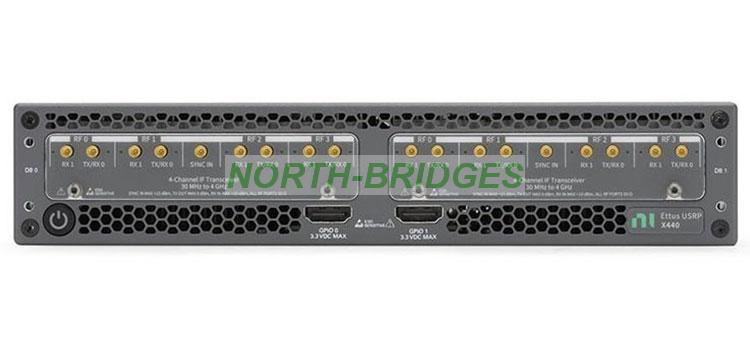
Figure 5: The Ettus USRP X440 offers up to 1.6 GHz bandwidth per channel, with a direct sampling transceiver architecture.
Stand-Alone or Host-Connected SDR Options
Applications have evolved since the first USRPs, and many require an embedded processor onboard. You may require this stand-alone configuration if your application has the SDR physically distributed from a centralized control system or deployed on its own.
If stand-alone is a key requirement, you will need to decide if a Xilinx Zynq™ Multiprocessor System on Chip (MPSoC) or RF System On Chip (RFSoC) is sufficient—or if you require a powerful Intel X86 processor onboard, as shown in Figure 6.
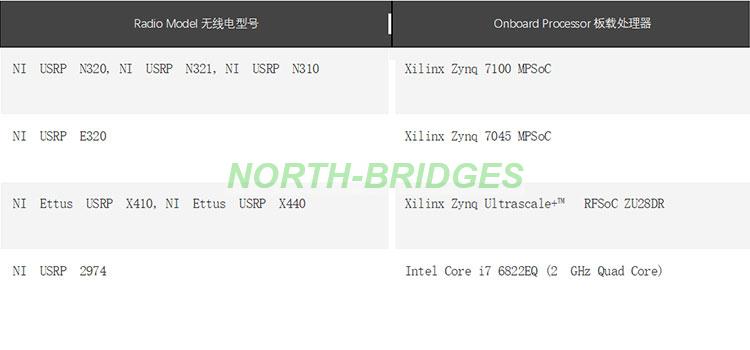
Table 1: Stand-Alone-Capable USRP Models with Onboard Processors
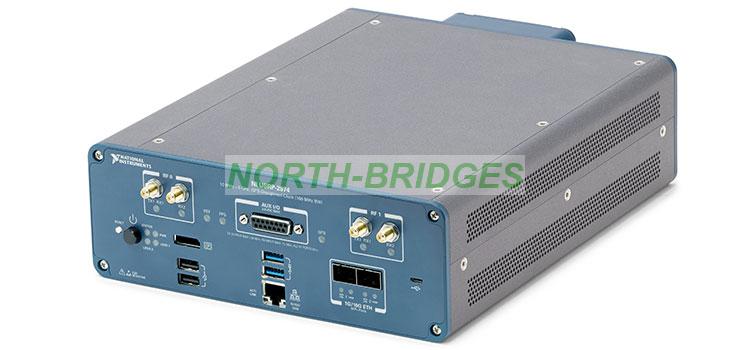
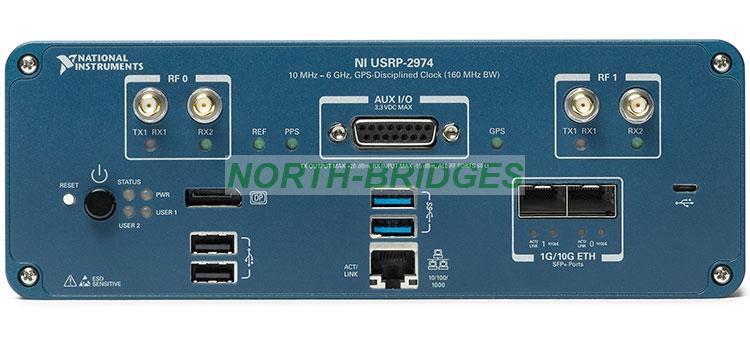
Figure 6: USRP 2974 Stand-Alone SDR with Built-in Intel Core i7
Ruggedization and Harsh Environments
If your application requires extended operating temperatures or cannot rely on air cooling, consider the Ettus Research Embedded Series for your application. Additionally, under the Ettus Research brand, you’ll find configurable options for the USRP B205mini for extended temperature range with the use of the industrial grade aluminum enclosure assembly for low SWaP operation. Alternatively, if you have extreme environmental requirements, NORTHBRIDGES can help connect you with our experienced ruggedization partners; contact us to explore these options.
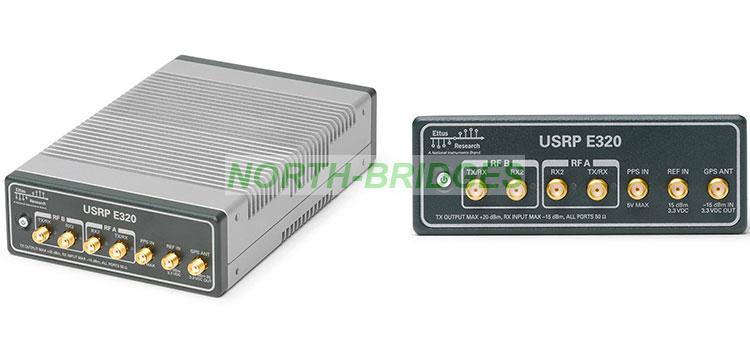
Figure 7: Embedded Series, USRP E320
Multichannel Synchronization
Many applications require multiple input and multiple output (MIMO) configurations with varying levels of synchronization. Some MIMO systems simply require a shared clock for ADCs and DACs, while others require every channel to be locked to a common clock and local oscillator for a full phase coherent operation.
A common MIMO application is for communications with spatial multiplexing. As this only requires clock synchronization, most USRPs with an external 10 MHz reference clock will be sufficient. An example of such a system was built by The University of Bristol and Lund University when they broke the wireless spectral efficiency world record using an SDR-based massive MIMO system. The system used in this application is composed of NI USRP Software Defined Radio Devices with onboard FPGAs.
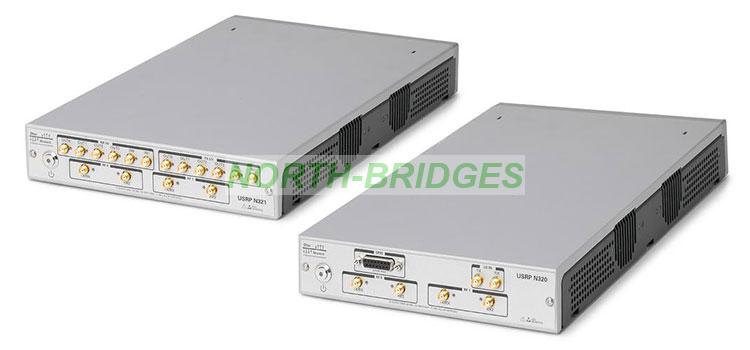
Figure 8: USRP N320 and N321 with Built-In LO Distribution Interfaces
When a full phase coherent operation is required, you have a few options to consider. If you require up to four channels of receive only operation, the Ettus Research USRP X310 with two TwinRx daughterboards can be set up to share the LO and operate in a phase coherent manner. If more than four channels are required, then consider the Ettus Research USRP N320 and N321 (shown in Figure 8) or the NI Ettus USRP X440. Since the USRP X440 is built with a direct-sampling intermediate frequency (IF) architecture, synchronization can be achieved by sharing sample clocks across up to eight transmit and eight receive channels. It is prepared for multidevice synchronization to an externally provided reference clock signal.
The USRP N321 comes equipped with built-in LO distribution hardware allowing for up to 128 x 128 phase coherent operation: A 32 x 32 configuration example is shown in Figure 9.
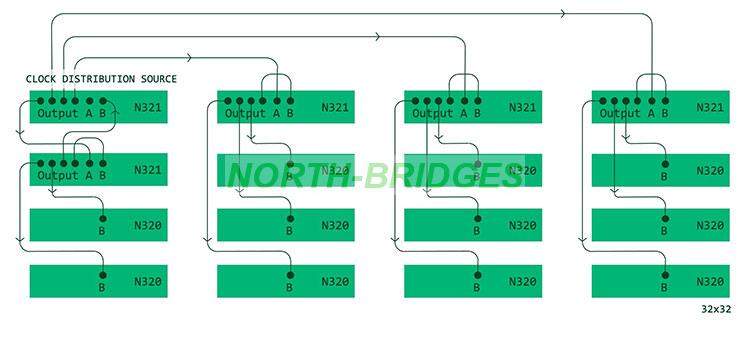
Figure 9: USRP N320 and N321 Multichannel Phase Coherent System
Distributed Multi-Radio Synchronization
In some applications, radios require synchronization but are not colocated. In these instances, a full phase coherent operation is a challenge; however, GPS-based synchronization can be used to get frequency and phase stability with a GPS disciplined oscillator (GPSDO). Many USRP models are equipped with a GPSDO from the factory.
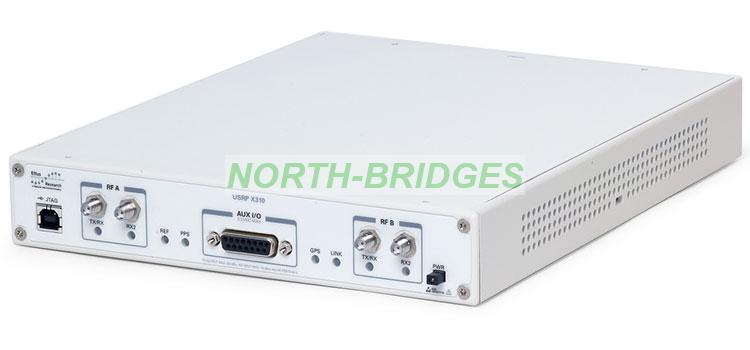
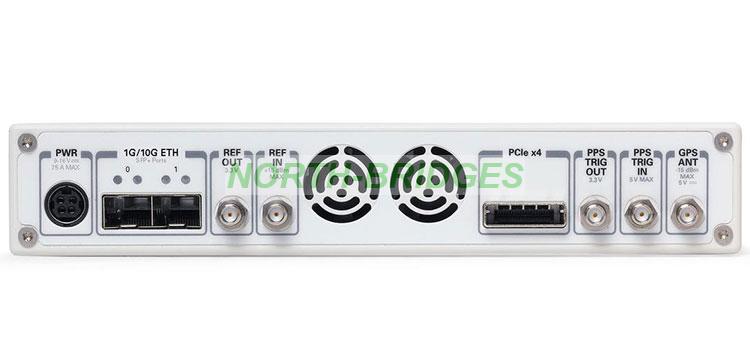
Figure 10: USRP X310 with Onboard GPS Disciplined Oscillator
Inline Signal Processing and FPGA Considerations
Some applications have processing requirements that are best suited for an onboard FPGA. These applications often have wide signal bandwidths or low/deterministic latency requirements. In these cases, picking a radio with the ability to program the FPGA is important. Many of the USB and lower-cost USRP models, such as the USRP B200mini, are built with smaller FPGA devices and do not have the space to add user code. Many of the higher-end radios come equipped with Kintex™ 7 class devices all the way up to the state-of-the-art Ettus USRP X410 and X440 with the Xilinx Zynq UltraScale+ RFSoC. Devices built on Xilinx Zynq include additional cores such as onboard soft-decision forward error correction (SD-FEC), multi-Arm processors, and built-in ADCs and DACs.
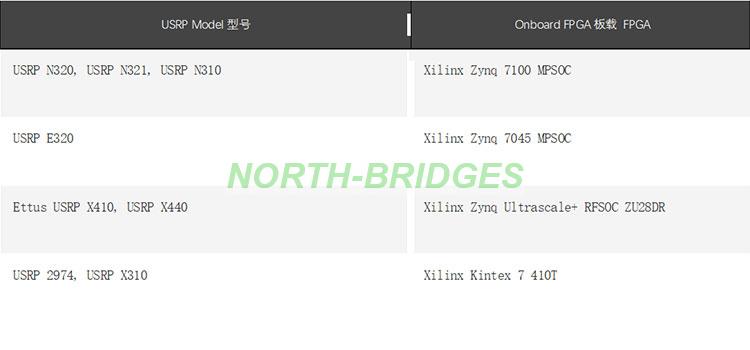
Table 2: Comparison of FPGA-Enabled USRPs
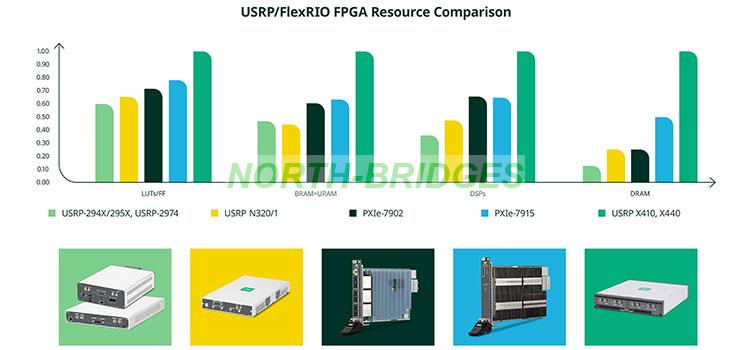
Figure 11: Comparison of FPGA Resources across NI FPGA Products
Summary of USRP Hardware and Software
Table 3 shows a matrix view of different USRP hardware and supported software.
Type | NI USRP Model | NI Ettus USRP Model | #Tx | #Rx | Frequency Range | BW | LabVIEW | LabVIEW FPGA | OSS-UHD | OSS-FPGA | Wireless Testbench |
Stand-Alone, FPGA Enabled High Performance | USRP X440 | 8 | 8 | 30 MHz - 4 GHz | 1.6 GHz | — | — | ||||
USRP X410 | 4 | 4 | 1 MHz - 7.2 Ggz | 400 MHz | |||||||
N/A | USRP N320, USRP N321 | 2 | 2 | 3 MHz - 6 GHz | 200 MHz | — | |||||
N/A | USRP N310 | 4 | 4 | 10 MHz - 6 GHz | 100 MHz | — | |||||
USRP-2974 | N/A | 2 | 2 | 10 MHz - 6 GHz | 160 MHz | — | |||||
Host Connected, FPGA Enabled, High Performance | USRP-2944 | USRP X310 + UBX | 2 | 2 | 30 MHz - 6 GHz | 160 MHz | |||||
USRP-2945 | USRP X310 + TwinRX | 0 | 4 | 10 MHz - 6 GHz | 80 MHz | ||||||
USRP-2954 | USRP X310 + UBX + GPSDO | 2 | 2 | 30 MHz - 6 GHz | 160 MHz | ||||||
USRP-2955 | USRP X310 + TwinRX +GPSDO | 0 | 4 | 10 MHz - 6 GHz | 80 MHz | ||||||
NA | USRP X310 + OBX | 2 | 2 | 10 MHz–8.4 GHz | 160 MHz | — | — | ||||
Low SWAP Stand Alone Embedded | N/A | USRP E320 | 2 | 2 | 70 MHz - 6 GHz | 56 MHz | — | — | — | ||
Low SWAP Low Cost USB Connected | N/A | USRP B206mini | 1 | 1 | 70 MHz - 6 GHz | 56 MHz | — | — | — | ||
USRP-2900 | USRP B200 | 1 | 1 | 70 MHz - 6 GHz | 56 MHz | — | — | — | |||
USRP-2901 | USRP B210 | 2 | 2 | 70 MHz - 6 GHz | 56 MHz | — | — | — | |||
Table 3. USRP Hardware and Supported Software
Key Takeaways on USRP Selection
SDRs are powerful tools for wireless research, design, prototyping, and deployment. Many options exist, and choosing the right radio for your application has many considerations. However, with a careful assessment of the various software and hardware factors outlined in this white paper, you can make an informed decision and work with the most popular open SDR on the market.
Contact: Windy Lian
Phone: 13862120662
E-mail: sales@north-bridges.com
Whatsapp:
Add: Suzhou City, China
We chat